Why choose a solid wood table over MDF or veneer?
A beautiful table should not make you start living more carefully. It is there to be used – for breakfasts, for work, for drawing with the children, for having friends over and staying at it longer than you planned. A table is not an exhibit. It is meant to be part of a real home.
Daily use leaves marks over time. Small scratches, worn patches, a shift in the colour of the wood under light. None of that means the table is ruined, or that you should be thinking about replacing it.
And this is where one of the greatest advantages of solid wood shows. Its surface can be sanded back, levelled and protected again. After many years of heavy use, a table can look almost the way it did on the day it arrived.
A good table does not have to stay perfect for its whole life. It does have to be repairable when the time comes. With solid wood, the marks of everyday life are not the end of a piece of furniture – they are simply the next stage of its use.
That is the fundamental difference between a solid wood table and one made from MDF, particleboard or covered with a thin layer of veneer. When new, they can look similar. The real difference only shows years later.

Solid wood, MDF, veneer and particleboard – what really sets them apart?
The material a table is made from decides more than how it looks. It also affects durability, the way it ages and what can be repaired later.
So the key question is not only how the table looks on the day you buy it. It is also worth asking what can be done with it after five or fifteen years of use.
Laminated particleboard
Particleboard covered with laminate is economical and easy to care for day to day, as long as the surface stays sealed.
The trouble starts once the laminate or an edge is damaged. If moisture gets inside, the core can swell and deform permanently. That kind of damage cannot be sanded out or reversed. Usually the whole element has to be replaced.
A deeper scratch or a chip exposes the material under the decorative layer, and a local repair often stays visible.
MDF
MDF is a board made of compressed wood fibres. It can be lacquered, laminated or veneered. It allows smooth surfaces and even colours, which is why it works well in many kinds of furniture.
For a table, though, the limit is what can be renewed. An MDF surface can sometimes be prepared and finished again, but a damaged or swollen core cannot be sanded back the way solid wood can. If the board deforms, restoring its original look is difficult and often impossible.
Veneer
Veneer is a thin layer of real wood bonded to a stable core, usually MDF or plywood. It is therefore not an imitation of wood and can look very natural.
The limit is the thickness of that wooden layer. A veneered top can sometimes be gently refreshed, but heavy sanding can wear through the veneer and expose the material underneath. Deep scratches, chips and edge damage are therefore much harder to remove.
Veneer can be a good answer where lightness, dimensional stability or cost matter most. It does not give the same scope for restoration as solid wood.
Solid wood
In a solid wood top, the natural material does not stop just below the surface. That makes it possible to remove the worn layer, sand out scratches and discolouration, repair small losses and then protect the whole surface again.
Even after many years, a top can be renewed without replacing the whole table. The wood can also take a new finish colour if the interior changes, or the household's needs do.
Deep cracks or larger deformations may call for more advanced joinery, but they do not rule out restoration. Solid wood can be repaired, filled, levelled and worked again. In that respect it gives far more scope than particleboard, MDF or a thin veneer.
Solid wood simply has something left in reserve for the years ahead.
A good table does not have to stay perfect for its whole life. It does have to be repairable when the time comes.
Solid wood, MDF, veneer and particleboard – what really sets them apart?
The material a table is made from decides more than how it looks. It also affects durability, the way it ages and what can be repaired later.
So the key question is not only how the table looks on the day you buy it. It is also worth asking what can be done with it after five or fifteen years of use.
Laminated particleboard
Particleboard covered with laminate is economical and easy to care for day to day, as long as the surface stays sealed.
The trouble starts once the laminate or an edge is damaged. If moisture gets inside, the core can swell and deform permanently. That kind of damage cannot be sanded out or reversed. Usually the whole element has to be replaced.
A deeper scratch or a chip exposes the material under the decorative layer, and a local repair often stays visible.
MDF
MDF is a board made of compressed wood fibres. It can be lacquered, laminated or veneered. It allows smooth surfaces and even colours, which is why it works well in many kinds of furniture.
For a table, though, the limit is what can be renewed. An MDF surface can sometimes be prepared and finished again, but a damaged or swollen core cannot be sanded back the way solid wood can. If the board deforms, restoring its original look is difficult and often impossible.
Veneer
Veneer is a thin layer of real wood bonded to a stable core, usually MDF or plywood. It is therefore not an imitation of wood and can look very natural.
The limit is the thickness of that wooden layer. A veneered top can sometimes be gently refreshed, but heavy sanding can wear through the veneer and expose the material underneath. Deep scratches, chips and edge damage are therefore much harder to remove.
Veneer can be a good answer where lightness, dimensional stability or cost matter most. It does not give the same scope for restoration as solid wood.
Solid wood
In a solid wood top, the natural material does not stop just below the surface. That makes it possible to remove the worn layer, sand out scratches and discolouration, repair small losses and then protect the whole surface again.
Even after many years, a top can be renewed without replacing the whole table. The wood can also take a new finish colour if the interior changes, or the household's needs do.
Deep cracks or larger deformations may call for more advanced joinery, but they do not rule out restoration. Solid wood can be repaired, filled, levelled and worked again. In that respect it gives far more scope than particleboard, MDF or a thin veneer.
Solid wood simply has something left in reserve for the years ahead.
A good table does not have to stay perfect for its whole life. It does have to be repairable when the time comes.
Solid wood, MDF, veneer and particleboard – what really sets them apart?
The material a table is made from decides more than how it looks. It also affects durability, the way it ages and what can be repaired later.
So the key question is not only how the table looks on the day you buy it. It is also worth asking what can be done with it after five or fifteen years of use.
Laminated particleboard
Particleboard covered with laminate is economical and easy to care for day to day, as long as the surface stays sealed.
The trouble starts once the laminate or an edge is damaged. If moisture gets inside, the core can swell and deform permanently. That kind of damage cannot be sanded out or reversed. Usually the whole element has to be replaced.
A deeper scratch or a chip exposes the material under the decorative layer, and a local repair often stays visible.
MDF
MDF is a board made of compressed wood fibres. It can be lacquered, laminated or veneered. It allows smooth surfaces and even colours, which is why it works well in many kinds of furniture.
For a table, though, the limit is what can be renewed. An MDF surface can sometimes be prepared and finished again, but a damaged or swollen core cannot be sanded back the way solid wood can. If the board deforms, restoring its original look is difficult and often impossible.
Veneer
Veneer is a thin layer of real wood bonded to a stable core, usually MDF or plywood. It is therefore not an imitation of wood and can look very natural.
The limit is the thickness of that wooden layer. A veneered top can sometimes be gently refreshed, but heavy sanding can wear through the veneer and expose the material underneath. Deep scratches, chips and edge damage are therefore much harder to remove.
Veneer can be a good answer where lightness, dimensional stability or cost matter most. It does not give the same scope for restoration as solid wood.
Solid wood
In a solid wood top, the natural material does not stop just below the surface. That makes it possible to remove the worn layer, sand out scratches and discolouration, repair small losses and then protect the whole surface again.
Even after many years, a top can be renewed without replacing the whole table. The wood can also take a new finish colour if the interior changes, or the household's needs do.
Deep cracks or larger deformations may call for more advanced joinery, but they do not rule out restoration. Solid wood can be repaired, filled, levelled and worked again. In that respect it gives far more scope than particleboard, MDF or a thin veneer.
Solid wood simply has something left in reserve for the years ahead.
A good table does not have to stay perfect for its whole life. It does have to be repairable when the time comes.
Solid wood, MDF, veneer and particleboard – what really sets them apart?
The material a table is made from decides more than how it looks. It also affects durability, the way it ages and what can be repaired later.
So the key question is not only how the table looks on the day you buy it. It is also worth asking what can be done with it after five or fifteen years of use.
Laminated particleboard
Particleboard covered with laminate is economical and easy to care for day to day, as long as the surface stays sealed.
The trouble starts once the laminate or an edge is damaged. If moisture gets inside, the core can swell and deform permanently. That kind of damage cannot be sanded out or reversed. Usually the whole element has to be replaced.
A deeper scratch or a chip exposes the material under the decorative layer, and a local repair often stays visible.
MDF
MDF is a board made of compressed wood fibres. It can be lacquered, laminated or veneered. It allows smooth surfaces and even colours, which is why it works well in many kinds of furniture.
For a table, though, the limit is what can be renewed. An MDF surface can sometimes be prepared and finished again, but a damaged or swollen core cannot be sanded back the way solid wood can. If the board deforms, restoring its original look is difficult and often impossible.
Veneer
Veneer is a thin layer of real wood bonded to a stable core, usually MDF or plywood. It is therefore not an imitation of wood and can look very natural.
The limit is the thickness of that wooden layer. A veneered top can sometimes be gently refreshed, but heavy sanding can wear through the veneer and expose the material underneath. Deep scratches, chips and edge damage are therefore much harder to remove.
Veneer can be a good answer where lightness, dimensional stability or cost matter most. It does not give the same scope for restoration as solid wood.
Solid wood
In a solid wood top, the natural material does not stop just below the surface. That makes it possible to remove the worn layer, sand out scratches and discolouration, repair small losses and then protect the whole surface again.
Even after many years, a top can be renewed without replacing the whole table. The wood can also take a new finish colour if the interior changes, or the household's needs do.
Deep cracks or larger deformations may call for more advanced joinery, but they do not rule out restoration. Solid wood can be repaired, filled, levelled and worked again. In that respect it gives far more scope than particleboard, MDF or a thin veneer.
Solid wood simply has something left in reserve for the years ahead.
Why is solid wood the longer-term choice?
The higher price of a solid wood table comes from more than the value of the material and the way it is made. You are also paying for the ability to repair, refresh and refinish it later.
That difference may not be visible on the day you buy. It shows years later, when one top has to be replaced and the other only needs renewing.
A solid wood table can be:
- refreshed after years of heavy use,
- cleared of most scratches, worn patches and discolouration,
- protected again,
- finished in a different colour,
- matched to a changed interior,
- kept rather than replaced with another piece of furniture.
So it is worth looking not only at the initial price of a table, but also at how long you will be able to use it and whether its good looks can be brought back.

What does restoring a table after several years involve?
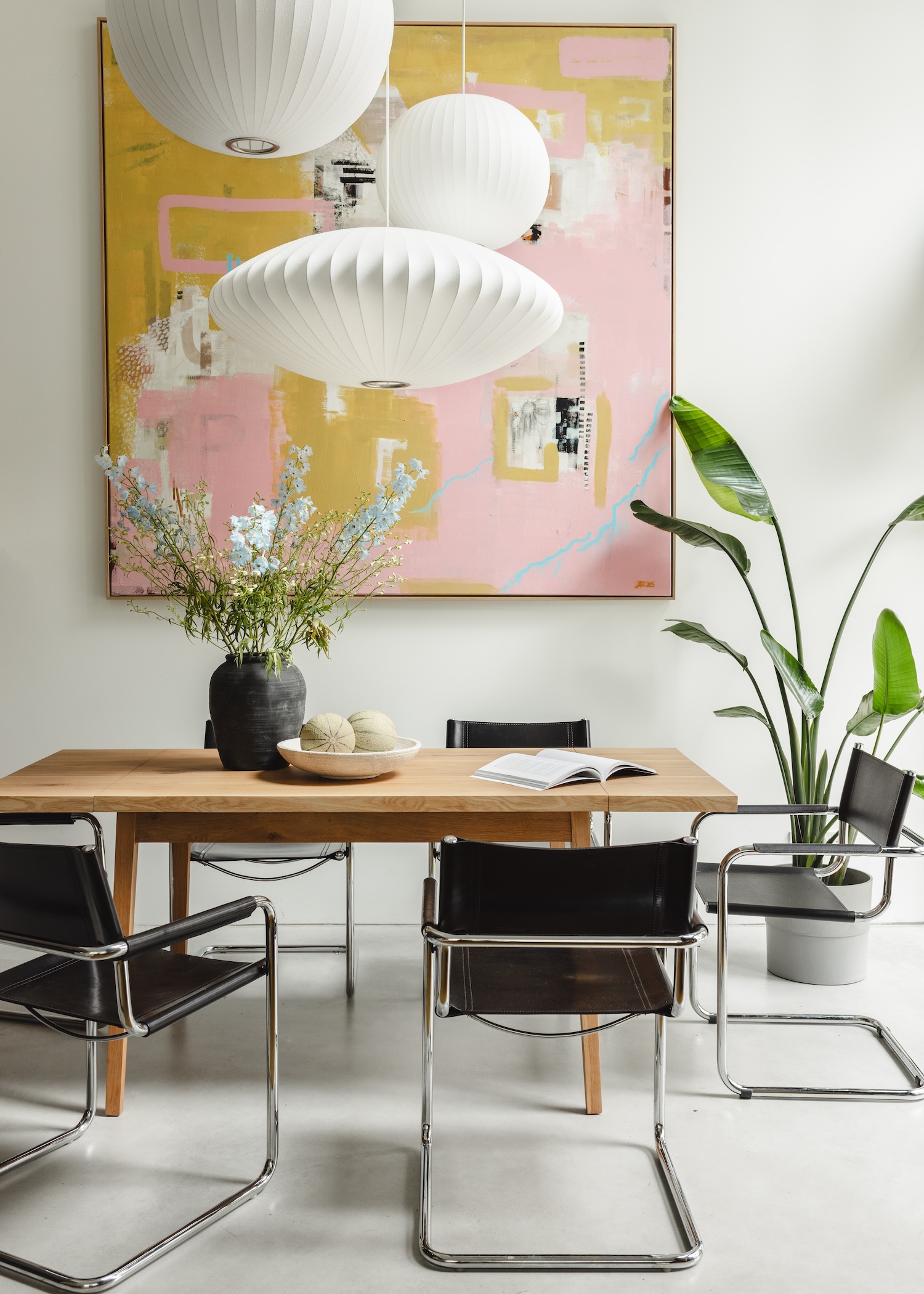
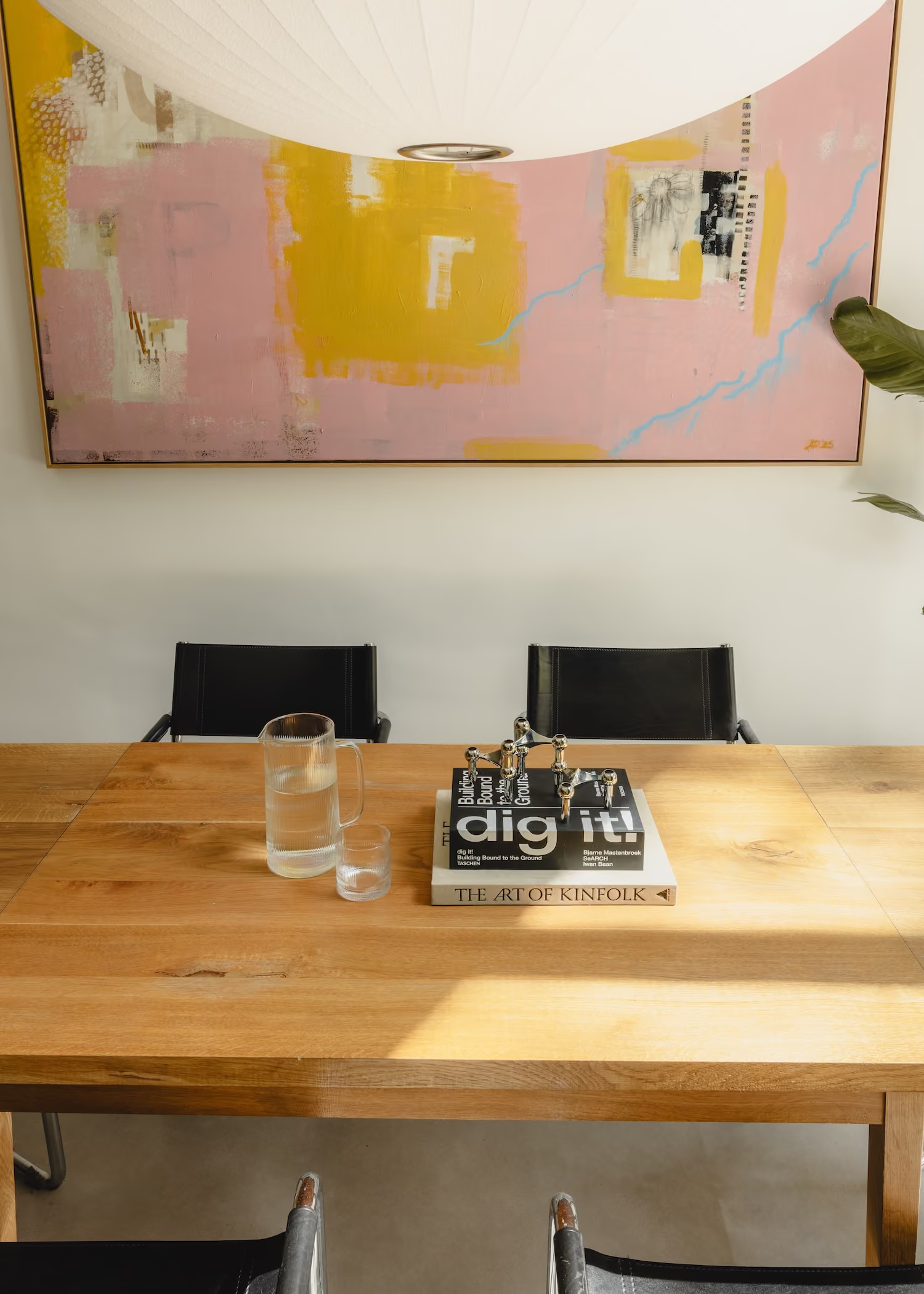
After seven years of use, an oak table belonging to one of our clients came back to our workshop. The photographs in this article show its condition before restoration and the result afterwards.
The main top had been in heavy use throughout, and exposed to daylight. The wood changed colour naturally, taking on a warmer tone. The extension leaves were used far less often and stored in different conditions, so they aged differently. Over time, differences in colour appeared, along with worn patches, scratches and slight deformations.
When the table was due to move to a new home with its owners, there was no need to replace it. It still suited their life – it only needed refreshing.
In our workshop we:
- assessed the condition of the top, the leaves and the structure,
- removed the existing finish and the marks of years of use,
- sanded the surface, taking out scratches, worn patches and discolouration,
- levelled the elements and refitted the extension leaves,
- protected the wood, restoring a consistent, natural tone.
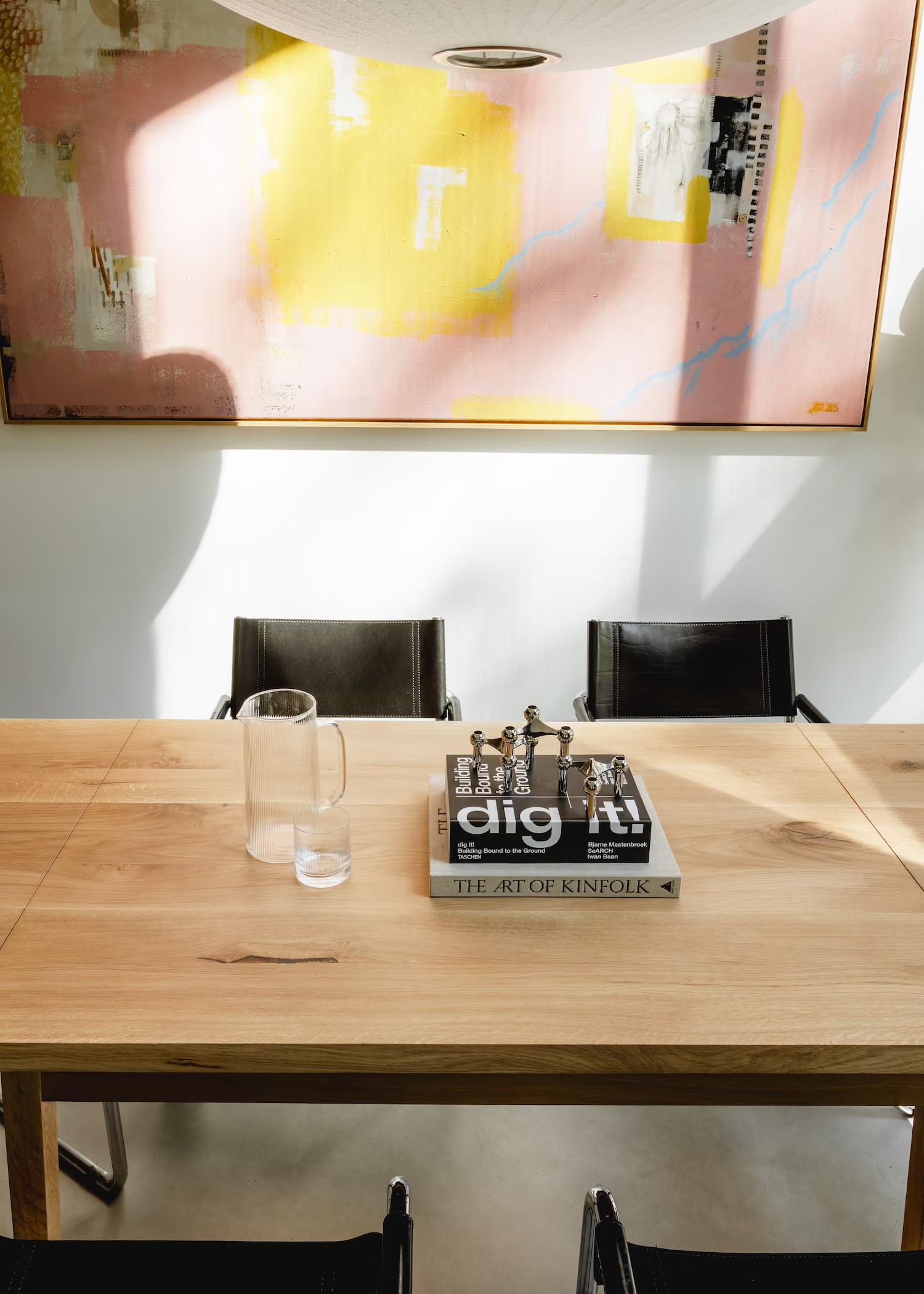
After the work, the table looked new. It was not replaced with a new one – it is still the same piece of furniture, the one seven years of family life happened around.
That is exactly the advantage of solid wood. It does not have to look perfect the whole time in order to stay with you for a long time.
What does real durability mean?
The durability of a piece of furniture is not about it never getting scratched. It is about the marks of use not writing off its future.
Solid wood changes under light, temperature and daily use. It can take on a patina over time, and years later be refreshed, repaired or finished anew.
You should not have to fit your life around a table. A good table should fit the way you actually live – including the days when everyday life leaves its marks on it.
Durability is not about a piece of furniture never getting scratched. It is about the marks of use not writing off its future.
Frequently asked questions
Can every solid wood table be restored?
Yes. Every solid wood table can be restored, although it will not always be equally simple. Sometimes it is enough to sand the surface and protect it again; deep cracks, losses or larger deformations call for more advanced joinery. What matters is that solid wood offers repair instead of replacing the whole piece.
Does a restored table look new?
Scratches, worn patches and discolouration can usually be greatly reduced or removed altogether. Once the surface has been prepared and protected again, a table can look new while keeping its own grain and individual character.
Can a veneered table be restored as well?
Gentle refreshing of veneer is sometimes possible, but the scope of the work is limited by the thickness of the wooden layer. Heavy sanding can wear through it, so there is less room for restoration than with solid wood.
Is a solid wood table more expensive than MDF or veneer?
Usually yes, but the difference comes from the material, the way it is made and the far greater scope for repair. A solid wood table can be restored and serve for years to come, whereas a damaged particleboard or MDF element often has to be replaced.
Does your HOOM table need refreshing?
If your table has a few intensive years behind it, that does not mean it is time to replace it. Write to us and show us its condition. We will see how we can bring back the look it started with in your home.