Restaurant and hotel tables: how to choose size, material and structure
On a rendering, almost any table looks good. The real test comes when the room is full: chairs pulled out, waiters moving with trays, tables pushed together, spilled coffee to clear before the next guests sit down.
That is when the problems appear that no render shows. A top that is too small. A leg where another guest should be sitting. A base you catch your foot on. A surface that needs more care than the pace of service allows.
A good restaurant or hotel table has to answer to both sides. Guests notice comfort, appearance and the way the table shapes the space. Staff notice stability, ease of cleaning, weight and how quickly the room can be rearranged.
The short version:
- Start with the way the room works, not with the way the table looks.
- Size the top around a full place setting, not around the number of chairs.
- Match the shape and the base to the layout of the space.
- Choose material and finish for how hard the table will be used.
- Allow for how often tables get moved and reconfigured.
- Check that the structure leaves room for the chairs and for the people in them.
Start with the most demanding part of the day
A breakfast restaurant works differently from a small dining room that opens in the evening. A table in a hotel lobby has a different job from one in a conference room. Even within a single property, the answer may not be the same in every space.
Before choosing models, it is worth answering a few questions:
- How many guests use the space at once?
- How long do they usually stay at a table?
- Will tables be joined and separated often?
- How much room does a full place setting take?
- Are dishes served individually or placed in the middle?
- How often does the layout change?
- Who moves, cleans and resets the furniture?
A hotel restaurant may need many tables for two in the morning, larger settings for groups in the afternoon and a quieter arrangement in the evening. One good-looking model will not always be the best answer to all three.
A guest spends an hour at the table. Staff come back to it all day.
Start with the most demanding part of the day
A breakfast restaurant works differently from a small dining room that opens in the evening. A table in a hotel lobby has a different job from one in a conference room. Even within a single property, the answer may not be the same in every space.
Before choosing models, it is worth answering a few questions:
- How many guests use the space at once?
- How long do they usually stay at a table?
- Will tables be joined and separated often?
- How much room does a full place setting take?
- Are dishes served individually or placed in the middle?
- How often does the layout change?
- Who moves, cleans and resets the furniture?
A hotel restaurant may need many tables for two in the morning, larger settings for groups in the afternoon and a quieter arrangement in the evening. One good-looking model will not always be the best answer to all three.
A guest spends an hour at the table. Staff come back to it all day.
Start with the most demanding part of the day
A breakfast restaurant works differently from a small dining room that opens in the evening. A table in a hotel lobby has a different job from one in a conference room. Even within a single property, the answer may not be the same in every space.
Before choosing models, it is worth answering a few questions:
- How many guests use the space at once?
- How long do they usually stay at a table?
- Will tables be joined and separated often?
- How much room does a full place setting take?
- Are dishes served individually or placed in the middle?
- How often does the layout change?
- Who moves, cleans and resets the furniture?
A hotel restaurant may need many tables for two in the morning, larger settings for groups in the afternoon and a quieter arrangement in the evening. One good-looking model will not always be the best answer to all three.
A guest spends an hour at the table. Staff come back to it all day.
Start with the most demanding part of the day
A breakfast restaurant works differently from a small dining room that opens in the evening. A table in a hotel lobby has a different job from one in a conference room. Even within a single property, the answer may not be the same in every space.
Before choosing models, it is worth answering a few questions:
- How many guests use the space at once?
- How long do they usually stay at a table?
- Will tables be joined and separated often?
- How much room does a full place setting take?
- Are dishes served individually or placed in the middle?
- How often does the layout change?
- Who moves, cleans and resets the furniture?
A hotel restaurant may need many tables for two in the morning, larger settings for groups in the afternoon and a quieter arrangement in the evening. One good-looking model will not always be the best answer to all three.
Size the top around the place setting, not the chairs
Four chairs will fit around a surprisingly small table. That does not mean dinner will.
A top has to hold plates, cutlery, glasses, bottles, menus, bread, condiments and whatever is served in the middle. In a hotel lobby it may be a laptop, papers and a cup of coffee instead.
As a starting point, allow around 60 cm of usable edge per person.
| Planned number of seats | Practical starting point |
|---|---|
| 2 people | 70 × 70 cm with a simple setting; 80 × 80 cm for more room |
| 4 people, square table | 80 × 80 cm in a compact layout; 90 × 90 cm with a fuller setting |
| 4 people, rectangular table | around 120 × 75–80 cm |
| 6 people, rectangular table | around 160 × 80–90 cm |
| 4 people, round table | around 100–110 cm in diameter |
| 6 people, round table | around 120–130 cm in diameter |
These are not universal figures. A cafe where two cups usually sit on the table needs a different surface from a restaurant with a tasting menu and a full setting.
The best check is to lay a full setting from your own service on a sample top.
Table height also has to be judged together with the actual chair. 74–76 cm is the usual starting point, but comfort also depends on the height of the seat and on what sits underneath the top.

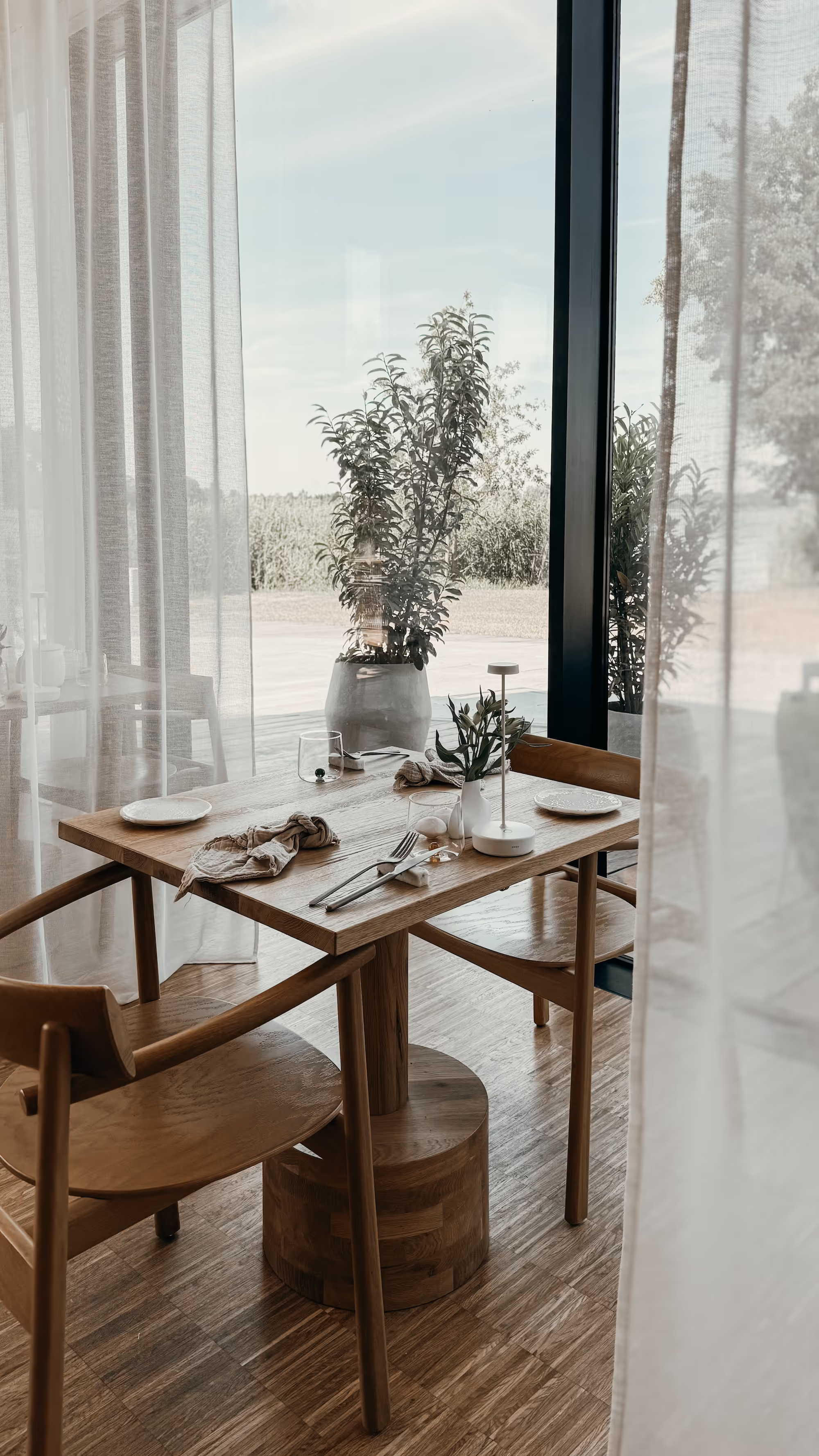
Match the shape to the way the room is used
Shape affects the character of an interior, but in a commercial space it should first of all suit the layout, the number of seats and the way the room gets rearranged.
Square tables
They make good use of a regular layout and join easily into larger configurations. They work where booking sizes change often.
When joining them, check where the legs sit. Two tops pushed together should not create a place where nobody can comfortably sit.
Rectangular tables
A natural choice for larger groups, conference rooms and shared tables. They bring order and a clear rhythm to a room, but usually offer less flexibility than smaller square tables.
Round tables
They make conversation easier and soften the geometry of a room. They work well in the quieter parts of a restaurant, in lobbies and in meeting areas.
They do need more space around them, and you cannot easily add seats by pushing several tops together.
Oval and barrel tables
They combine the softness of a round form with the direction of a rectangular one. They can become a recognisable element of an interior, particularly as larger shared tables.
They are not the most practical choice if they are meant to be joined with other tables regularly.
You do not have to settle on one shape for a whole room. A repeatable set of smaller tables can work alongside one larger table that organises the space and gives it character.
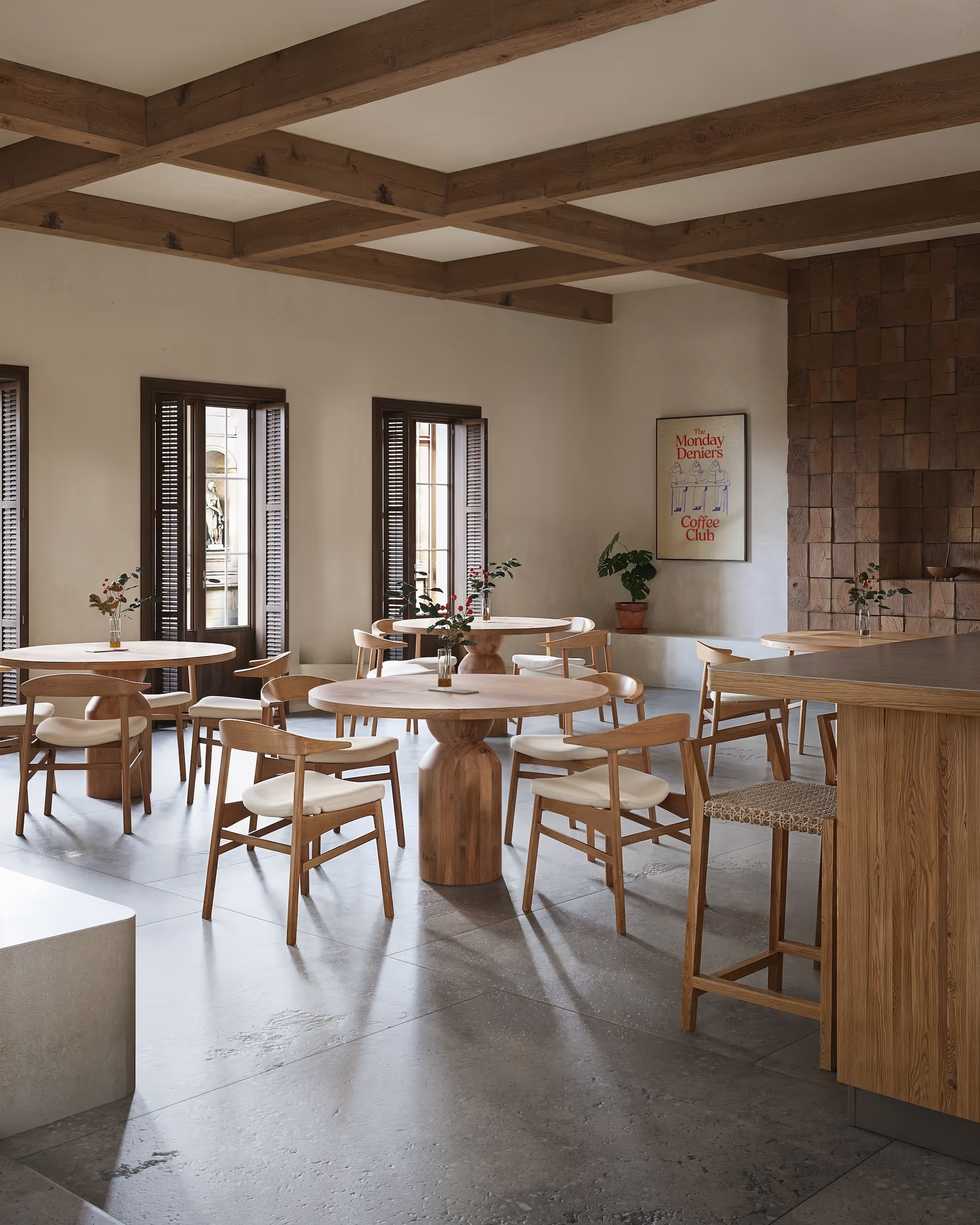
Structure and the comfort of guests
Comfort is not decided by the surface alone. Leg placement, the form of the base and the free space underneath matter just as much.
Four legs
They give natural stability, but their position has to suit the width of the chairs. Legs set too close to the corners can reduce the number of seats or make it hard to add another chair.
Central base
It frees up the edge of the top and makes it easier to change the number of seats. The lower part of the base should not take up the room needed for feet.
Adjustable feet
They let you level a table on an uneven floor and stop it rocking. They matter most where furniture is moved often or pushed together.
Weight
A heavier table can be very stable, but it is not always the right answer in a room that gets rearranged several times a day. If tables are moved often, the structure has to balance stability with how easy it is to handle.
Extra features
Discreet hooks under the top can help with bags, especially at smaller tables. They are worth treating as a useful addition rather than something every venue needs.
Match material and finish to how hard the table will be used
Material affects durability and care, but it also does a lot of the work in how a room reads.
Tables take up a large part of a dining room and stay directly in view. If they look accidental, flimsy or cheap, even a well-designed interior loses something. The right material does the opposite – it organises the space, gives it character and makes it feel as though every element was chosen on purpose.
A sample shows colour and texture. It does not show how the surface will look after months of heavy use.
Before choosing, it is worth establishing:
- what kind of marks will appear most often,
- how quickly a top has to be ready for the next guests,
- what products the staff use,
- whether the surface will be disinfected regularly,
- whether the table should be refinished after a few years.
Why solid wood works well in restaurants and hotels
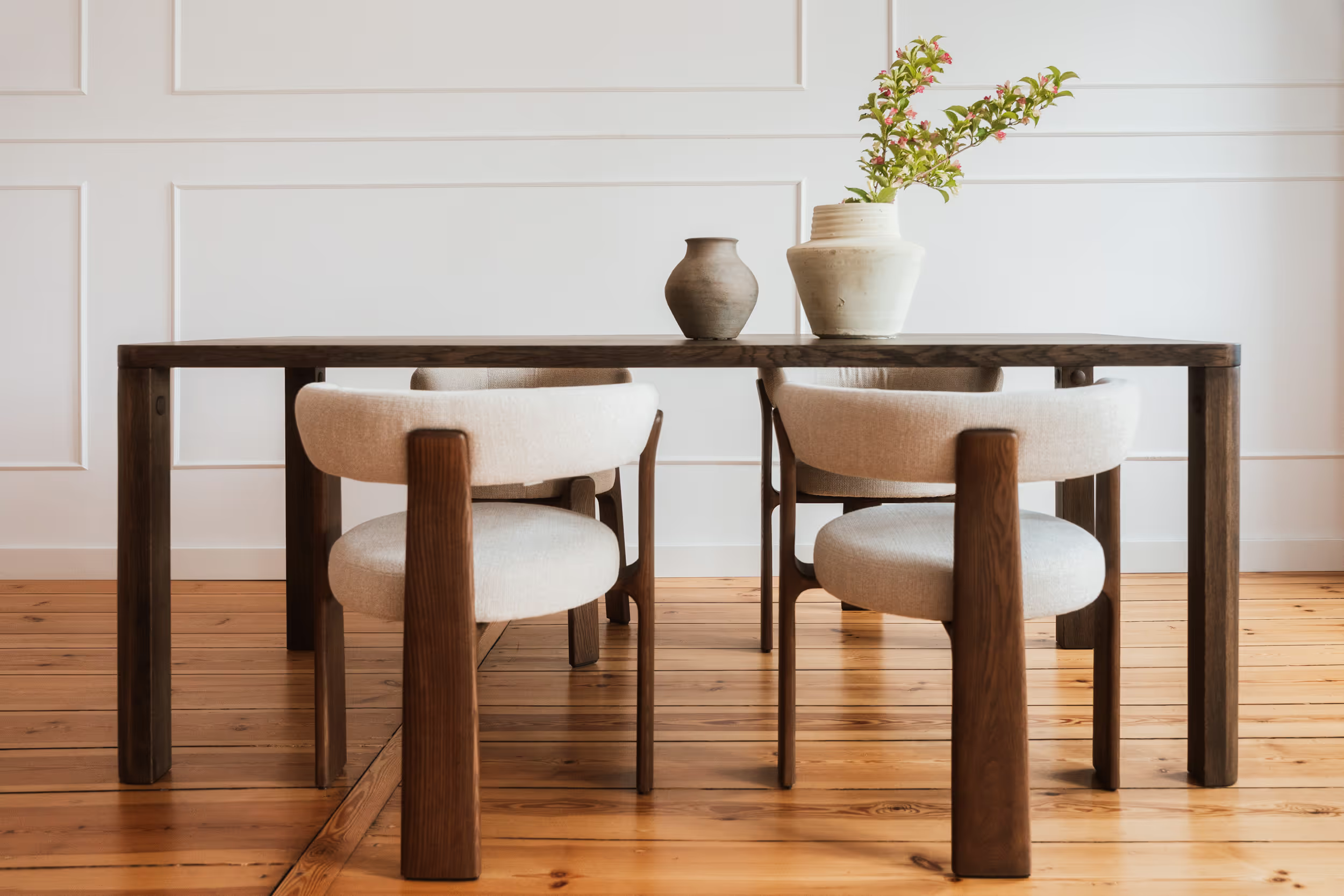
Solid wood is one of the best materials for interiors that are meant to feel well made. It brings warmth and a visual depth that surfaces imitating wood rarely manage.
Every top has its own grain, its own subtle differences in colour and its own character. Tables made this way do not look like anonymous fittings ordered to fill a room. They become part of the design and can noticeably lift how it is received.
This matters in restaurants and hotels, where guests judge a place by more than the food and the service. They notice the materials they touch, the weight of the furniture, how the edges are finished and whether the whole space holds together.
A solid wood table feels substantial. It does not read as light or accidental, and when it is well designed it can make an interior feel more considered and more genuine.
Solid wood also takes years of use. Scratches, wear and the marks of daily service do not have to mean replacing the table. The top can be sanded back and refinished, restoring its appearance and extending the life of the piece.
That is a real difference from materials whose damaged layer cannot be fully restored. With solid wood, a table is not equipment for a few seasons but something that can stay in a venue for years and change along with the interior.
For heavily used spaces, hard species such as oak and ash work particularly well. Durability in the end also depends on the structure and on protecting the surface properly.
Lacquer for heavily used interiors
In restaurants and hotels, lacquer is the finish we most often recommend. It creates a closed surface that is easier to clean day to day and better suited to heavy use.
For these projects we use a very durable lacquer made for surfaces exposed to constant contact, spills and regular cleaning. A well-chosen coating protects the wood while keeping its natural appearance, texture and depth of colour.
That matters most in venues with high turnover, where a top has to be ready quickly for the next service and the surface has to take repeated wiping.
Lacquer does not take the character out of the wood. Depending on the effect you choose, it can be very matt and understated, so the surface still looks natural rather than covered in a thick, glossy layer.
Oil-wax remains a good option for interiors where direct contact with the wood matters most and periodic care is acceptable. For restaurants and hotels, though, lacquer usually answers daily use better. You can compare both on our wood finishes page.
Natural stone
Stone can become one of the strongest elements in a room. Every slab has its own pattern, and the various types differ in hardness, absorbency and how they react to spills.
In a commercial space, protecting the surface properly is particularly important. In HOOM projects, stone tops can be covered with a transparent ceramic film that makes daily use easier and reduces the risk of staining and scratching.
Protection should always be matched to the specific stone and to the way the table will be used.
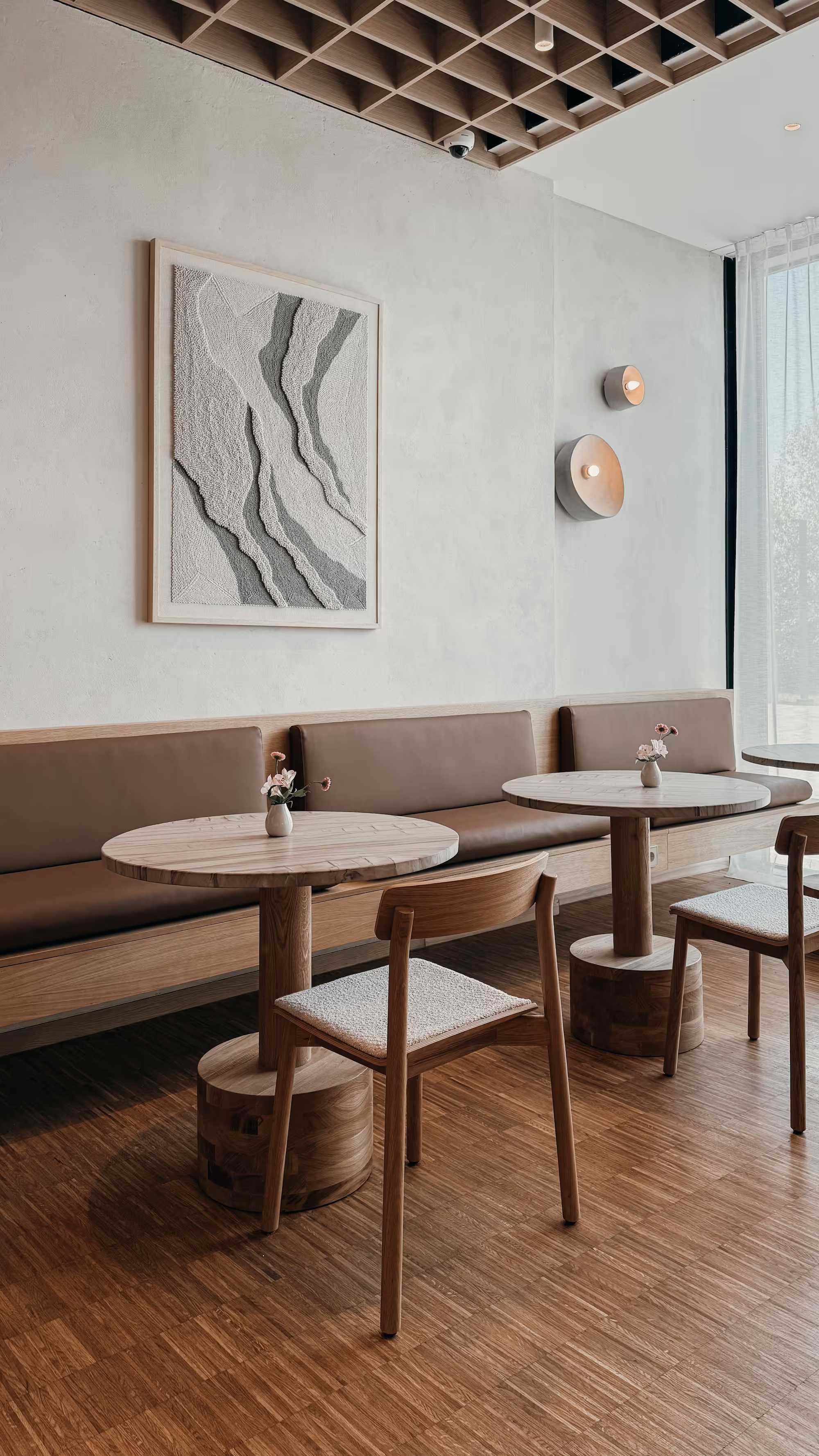
What to prepare before ordering
To put together the right recommendation and quote, it helps to have:
- the planned number of seats,
- the number and size of the tables,
- chair models or exact chair dimensions,
- how food will be served,
- the layouts you expect to use,
- preferred material and colour,
- the finish you have in mind,
- the delivery date,
- the delivery address and access conditions.
The earlier tables are considered in a project, the easier it is to get their size, structure and placement right without compromises later.
A good table looks its best when the room is waiting for the first guests, and still works in the evening, with glasses, crumbs and the last bill left on it.
Frequently asked questions
Which table shape works best in a restaurant?
If changing the layout often matters most, square and rectangular tables are usually the most practical. Round tables create a quieter atmosphere but are harder to join together.
How do you choose the size of a restaurant table?
Start from around 60 cm of usable edge per person. You also have to allow for the size of the service, the width of the chairs and the way dishes are served. The final size is best checked with a full setting in place.
Can a table designed for a home work in a restaurant?
Yes, but its specification has to suit heavier use. What matters most is the structure, stability, surface finish, the ability to level it and how easily it can be moved and maintained.
Is solid wood suitable for heavy use?
Yes. Properly made and protected, solid wood tables work well in restaurants and hotels. They last, they can be refinished, and they noticeably improve the way an interior is received.
Which wood finish works best in a restaurant?
In most restaurants and hotels, a durable lacquer made for heavily used surfaces is the best choice. It is easier to clean, it protects the wood and it copes with regular contact with spills and cleaning products.
Why choose solid wood tables for a restaurant or hotel?
Solid wood gives an interior warmth, substance and a more considered character. It does not read as accidental fittings but as part of the design. It can also be fully refinished after years of use.
What determines the price of bespoke restaurant tables?
Mainly the dimensions, the material, the base structure, the type of finish, the number of tables ordered and the delivery and installation conditions.
What information is needed for a quote?
The most important are: the number of tables and seats, the configurations required, the chairs chosen, the preferred material, the delivery date and the delivery address.
Designing a restaurant, hotel or another commercial space? Send us the planned number of seats, the sizes you have in mind and the material direction. We will help you settle the structure and the finish, and prepare a quote built around the project.